
The Hispanic Community Wants to Swim. What Happens When We Make It Possible?

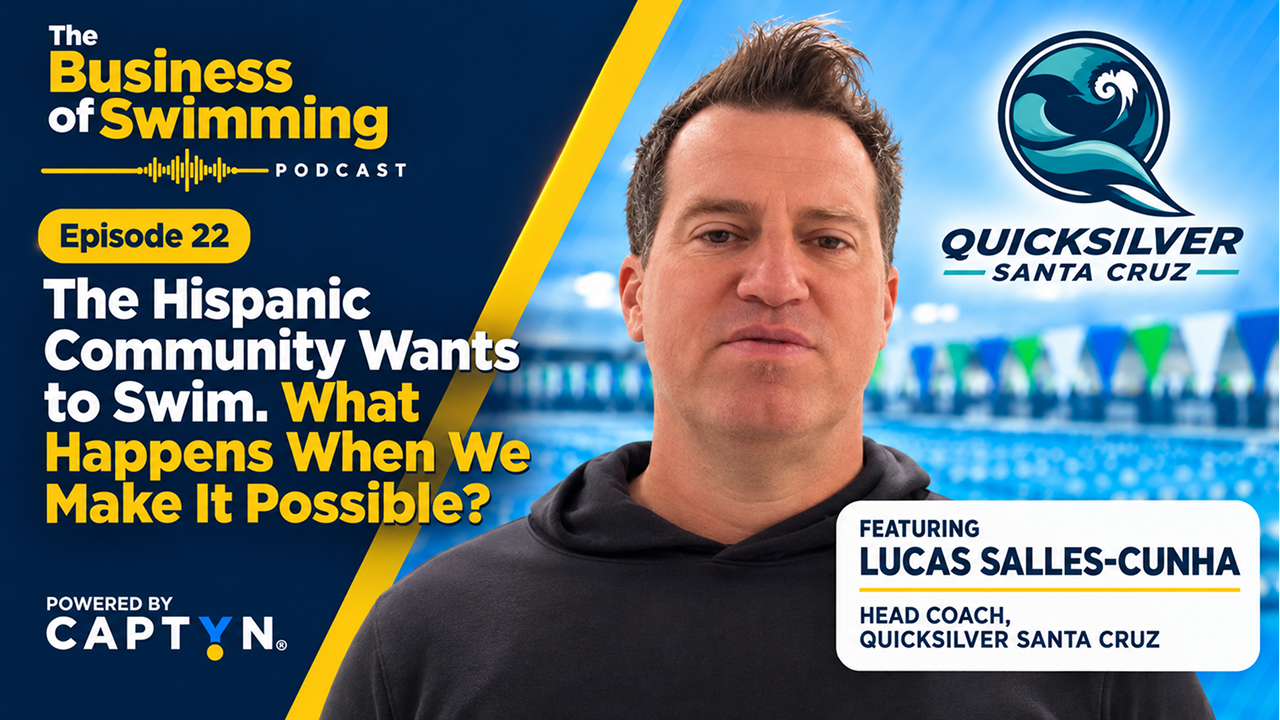
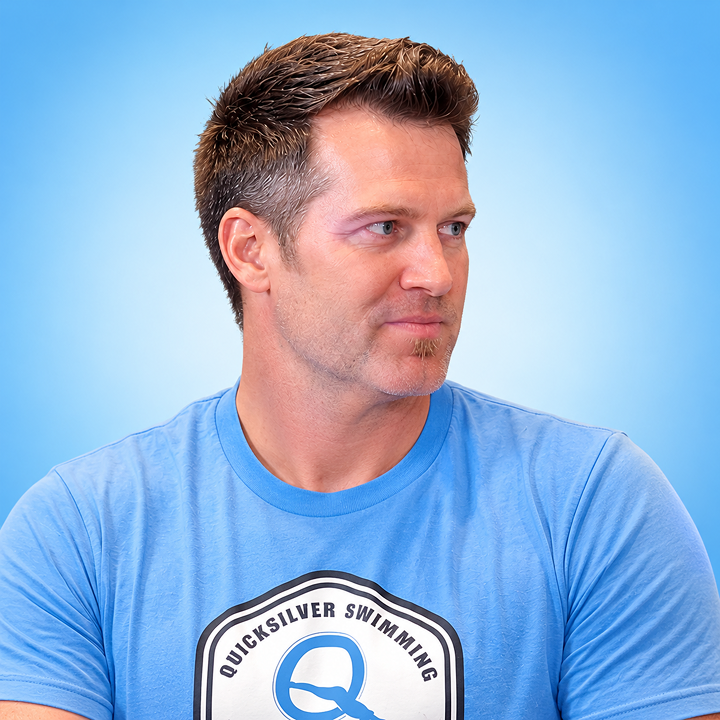

Dr. Lucas Salles-Cunha’s research in Watsonville challenges a common assumption about Hispanic participation in swimming and offers a path for teams to grow by serving their communities.
When Dr. Lucas Salles-Cunha started a swim team location in Watsonville, California, he expected the community to show up. Instead, attracting families proved difficult.
One explanation he heard was simple: the community didn’t want to swim.
Lucas wasn’t convinced.
“The community does want to swim. There’s just so many barriers preventing it that it makes it difficult.”
That question became the foundation of his doctoral research and, ultimately, a different way of thinking about swim team growth.
The gap between 18.7% of the U.S. population is hispanic and 3.4% of USA Swimming membership identifying as Hispanic or Latino is too large to ignore for many reasons.
For coaches and club leaders, the lesson goes beyond one program. When families are missing from the pool, the first question may not be how to market the team better. It may be what makes participation difficult and who can help remove those barriers.
The gap is real. The reasons are more complicated.
In his Watsonville dissertation, Lucas surveyed 63 qualifying parents and caregivers, interviewed 15 people, and held focus groups with parents and community leaders. His research centered on local Hispanic/Latino families with children ages 3 to 12. It was a local study, not a national portrait of every Hispanic community.
What he heard challenged the assumption that families simply weren’t interested. Parents described children who enjoyed the water and families who wanted their children to learn. But they also described competing demands on their money and time.
In the survey, the leading barriers were cost, parents’ available time, and competing activities. Families also discussed access to pools, transportation, short lessons, uncertainty about swimming, and a lack of familiarity with the next step after lessons.
Those findings connect with research elsewhere, without making the communities interchangeable. A 2026 Pediatrics Open Science study surveyed 1,100 parents in one Hartford, Connecticut, pediatric emergency department. Among children whose parents answered the swimming-ability question, 77.1% of Hispanic children were reported as nonswimmers or beginners, compared with 53.7% of non-Hispanic white children. The study relied on parent reports at one hospital, so its results should not be treated as a national estimate.
Another study of Chicago families found that cost was a common barrier across groups. Among Hispanic/Latine parents whose children had not taken lessons in the prior year, difficulty finding a place to go was also frequently reported. Its 2022 data reflected a period when pool closures and lifeguard shortages affected availability.
The useful question for a swim organization is therefore not, “Why don’t these families value swimming?” It is, “What would make swimming possible and worthwhile for the families in our community?”
Designing lessons around the family
Lucas heard that a short lesson could be a difficult proposition for a busy parent: arrange transportation, change the family’s schedule, drive to the pool, and then watch the lesson end 25 minutes later.
Quicksilver Santa Cruz responded with a different approach. Lucas described a Saturday program that, at the time of the interview, charged $50 per month for an hour-long lesson once a week. He said the program uses larger groups, with equipment such as life vests and fins when appropriate, and adjusts as swimmers progress. Most teams would think they lose money on $50 per month lessons. When in fact the revenue per lane hour is still higher than most age group and senior program. See our full talk on maximizing lane-hour value in our podcast with Nick Chevalier from West Coast Aquatics.
The organization also runs a separate school-district-funded program. Those sessions run twice a week for six weeks and are free to participating families. The goal is to develop swimming skills and offer a path onto the team when a child is ready—not every child reaches that point in the same six-week period.
The programs also make room for play. Lucas has observed children relax during less-structured time and try skills they practiced earlier in the lesson.
“I’m going to remember the play, the chatting with my friends, the cannonballs.”
The format is not a prescription for every club. Staffing, supervision, facility rules, age, and swimmer needs all matter. The broader idea is to ask families what makes a lesson accessible, valuable, safe, and enjoyable then design accordingly.
Lens 1: Stronger communities and lasting relationships
In Watsonville, Lucas says the school district and the city have been the most effective connections for reaching families. They already have relationships and communication channels that a swim team may not have on its own.
“When they blast something out, the community trusts it, they read it, they listen to it.”
That trust creates a reason for swim organizations to engage partners beyond the pool: schools, municipal recreation departments, community centers, public health organizations, and churches.
The shared goal can be bigger than team registration. A school district might want an after-school activity. A city might be focused on water safety and facility access. Families may want their children to gain confidence, learn a life skill, and have fun.
Those goals can complement one another.
Swimming lessons are one part of a broader approach to water safety. The CDC notes that formal lessons can reduce drowning risk, while children who have taken lessons still need close, constant supervision around water.
Lucas also sees an opportunity to change what he calls the positive swimming cycle: introduce swimming to children and families, support continued participation, and make it possible for some of those swimmers to become future coaches, lifeguards, and role models.
It is a long-term vision, not an automatic outcome. But it begins with a practical decision: invite families into a program designed with their circumstances in mind.
Lens 2: Fundraising with a purpose and a sustainable business model
Outreach is often treated as something a team can afford to do only after its core business is secure. Lucas’s experience offers another way to look at it.
In Watsonville, the school district funds the after-school program while Quicksilver operates it. Lucas described that partnership as the organization’s most important funding relationship for this work. He also said the team was beginning to approach local businesses about sponsorships and donations to support and sustain programs.
For another club, the mix might look different:
- A school or municipality could fund lessons or provide pool access.
- A local business or bank could sponsor lesson fees, equipment, or transportation.
- A foundation or individual donor could support a defined water-safety or participation goal.
- A club could combine scholarships with a fee families can afford.
Lucas’s USA Swimming outreach presentation makes an important distinction: reducing a membership fee alone may not solve affordability. Families may still face team dues, equipment, meet fees, travel, and the time required to participate. Its proposed funding framework encourages clubs to build support around those broader costs.
There is a business opportunity here, but it should be evaluated honestly. A low-cost program is not automatically profitable. Pool time, staffing, insurance, administration, and local demand will vary. Lucas said Quicksilver’s Saturday program makes some money and its school-funded program covers its costs; those results should not be assumed for another team.
The stronger case to a potential partner is specific: Here is the local need, here is who the program will serve, here is what it costs, and here is how we will measure progress.
Lens 3: A bigger opportunity for the sport
For Lucas, access and performance are not competing priorities. More children entering swimming means more children have the chance to discover what they can do in the water.
Some may want a life skill and a fun activity. Some may stay for the friendships. Others may eventually want to race at a high level. A strong program leaves room for those different goals.
“We have to give the athletes the opportunity to get there. And right now they don’t have that.”
The history of American swimming shows why opportunity and representation matter. In 2015, Simone Manuel, Lia Neal, and Natalie Hinds finished first, second, and third in the NCAA women’s 100-yard freestyle. The first all-Black top-three finish in an NCAA swimming event. Their achievement is an important milestone in its own right, not evidence that one outreach initiative caused it or that different communities share the same history.
The lesson for today’s coaches is not to promise future champions. It is to recognize how much talent and possibility the sport may never see when children lack an accessible first step.
Lucas’s own approach is to make the next step clear. When a swimmer is ready and interested, the team can invite them to continue—not leave the family to figure out where lessons end and team swimming begins. Other families may prefer to keep swimming recreationally, and that matters too.
Captyn’s earlier conversation with Lucas explores how Quicksilver is building first-generation swimmers in Watsonville. A related conversation about Block Party meets considers a different point on the pathway: making competition shorter and more approachable for families who want to race.
Start with a conversation, not an assumption
A team does not need to solve every barrier at once. Lucas recommends starting with a partner—a school district, city, or another organization that shares the goal and already knows the community.
From there, ask families a few questions:
- What makes it hard to participate? Consider the full cost, transportation, schedule, language, and access to a pool.
- What would make the experience valuable? Listen for what families want their children to learn and enjoy.
- Who already has the community’s trust? Work with those organizations instead of expecting families to find you.
- What happens after the first session? Offer clear options for continued lessons, recreational swimming, or team participation.
- What can you measure? Track enrollment, attendance, progression, and retention alongside the costs of delivering the program.
Lucas’s wish for swimming is straightforward: access for everyone. His research is a reminder that access is not created simply by putting a program on a schedule. It takes listening, partnership, and a willingness to build around the people a team hopes to serve.
About Dr. Lucas Salles-Cunha
Dr. Lucas Salles-Cunha is the head coach of Quicksilver Santa Cruz County, which offers competitive swimming, lessons, and outreach programs in Santa Cruz and Watsonville.
Lucas loves competition and coaches because he enjoys watching swimmers race. But his work is also driven by a desire to make swimming’s benefits available to more families. After hearing that people in Watsonville didn’t want to swim, he decided to investigate. His doctoral research found that families did want to participate, but faced barriers that made it difficult.
His wish for swimming is simple: access for everyone. He wants more people to experience the health, fitness, and structure the sport has given him—and, for those who choose it, the fun of competition.
More Ways to Explore Captyn

Demo
See Captyn in action by exploring top features and watching a free demo of the platform

Success Stories
See how organizations of all sizes are operating and growing their businesses on Captyn

Live Events
Meet up and chat with us at one of the many live events we sponsor and attend all across the country