
Small Town Hero is Building a Successful Swim Team Without Traditional Feeder Programs

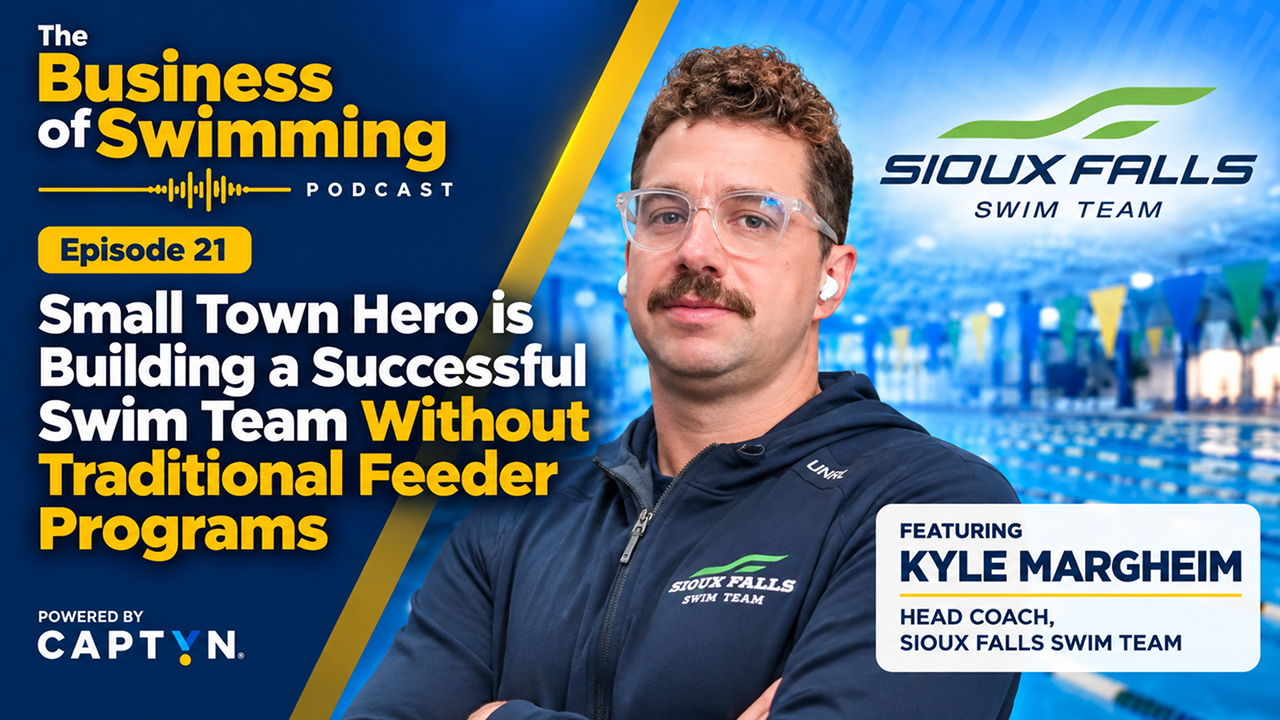

What happens when a swim team cannot count on a summer league to introduce families to the sport or a high school program to keep teenagers involved?
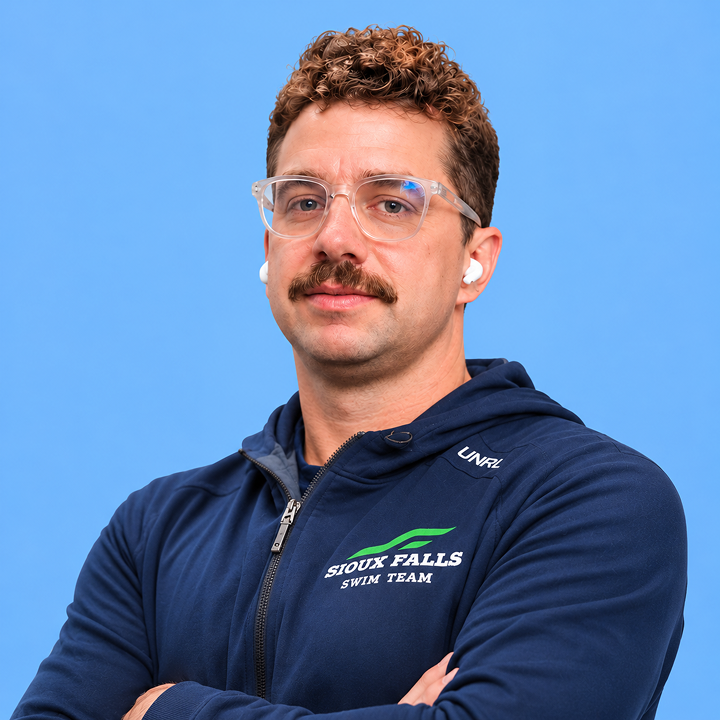
For Kyle Margheim, head coach of Sioux Falls Swim Team, the answer is to create more ways for kids to start, stay, and grow in swimming.
Sioux Falls is not a small town in the usual sense. The U.S. Census Bureau estimated the city’s population at 213,748 in 2025. But its swimming community faces challenges familiar to many isolated programs. Margheim said there is no local summer league introducing swimmers to competition and no high school swimming in South Dakota.
That leaves the club doing more than developing competitive swimmers. It must also help families discover the sport, create a place for teenagers to keep participating, and build a team identity outside the school environment. Without a school team, swimmers may have fewer opportunities for the school-based visibility and peer recognition that accompany other sports.
Travel adds another challenge. Omaha is approximately 180 miles and three hours away by road. For larger meets, Margheim said his upper-level swimmers travel to places such as Minneapolis and Des Moines, roughly four hours away, or Iowa City, roughly six hours away. There are closer swimming opportunities, too, but competition planning still requires careful choices about time and travel.
“We don’t have a summer league program, we don’t have … there’s no other competitive swimming or introduction to competitive swimming in our city right now.”
His approach offers a useful question for any swim team: What would your program look like if you designed it for the families who are not already swimming?
Create a first step families can say yes to
A year-round competitive team is not the only way to introduce a child to swimming.
Sioux Falls runs its own recreational program over an eight- or nine-week season. Swimmers need to be safe in the water, Margheim explained, but they do not need to be proficient in every stroke. They receive introductory coaching and have several opportunities to race during the session.
“It’s a short time frame commitment for the families.”
When the season ends, swimmers may return for another recreational session or, if invited, join the competitive team. Margheim said the team runs two or three recreational sessions a year.
That shorter commitment gives families a way to try swimming without deciding immediately whether they are ready for a full competitive season. It also gives coaches time to teach the basics and help swimmers discover what they enjoy.
A similar idea came up in our conversation with Ian Goss of Stingrays Swimming. His LAPS program uses flexible six-week sessions to give families a way to fit swimming around other activities. The two programs have different structures, but they start with a shared question: How can we make the first commitment work for the family? Read more in Building Swim Experiences Parents Want to Buy.
For teams considering a similar option, look at the family’s first decision: Do they understand who the program is for, what skills their child needs, how long it lasts, and what happens afterward?
Make room for the older beginner
Not every new swimmer is eight years old.
Margheim coaches a group for swimmers roughly 11 to 14 who are starting competitive swimming. Many, he said, come from families who have already tried other sports. The group gives those athletes a place to learn alongside peers rather than assuming they should already have years of swimming experience.
“If they have an interest in swimming, we wanna try to foster that and get them, you know, excited about swimming.”
Some may eventually pursue more competitive goals. Others may want a place to exercise and spend time with friends. Margheim sees value in both, and he wants swimmers to have other places to move within the program as their interests and abilities develop.
The practical takeaway is not that every club needs an identical group. It is to look at your entry points through the eyes of a new 13-year-old. Is there an age-appropriate place to start? Can the family tell what skills are required? Does the swimmer have a way to progress without feeling behind on day one?
Make the first meet fit the family’s life
For a new swimming family, a meet can be a big introduction to the sport. Margheim’s recreational meets are designed to keep that introduction manageable.
He said the team tries to keep those meets close to an hour and a half, including warm-up. Early events might include a 25 kick, a 25 backstroke, or a 50 freestyle; the events become more challenging as the season progresses. The team sometimes divides swimmers into colors for a championship meet to create a team atmosphere.
“We’re trying to just have them enjoy racing, keep it light and fun.”
The format recognizes that families are choosing among activities with different demands on their time. A new swimmer can experience racing while parents get a clearer picture of what a meet feels like.
Margheim said these recreational meets are not run under a USA Swimming sanction. He described using the races as a chance to see what swimmers are learning while keeping the experience encouraging for beginners. Any team considering its own format should check applicable safety, insurance, sanctioning, and officiating requirements.
For another perspective on shorter competition formats, see Captyn’s conversation on the Block Party concept and Rethinking Competition in Swimming for Developmental Athletes - These formats are distinct, but both discussions ask how a meet can fit more comfortably into a family’s schedule and grow the love of the sport in the athlete.
Let commitment match the swimmer’s goals
Flexibility does not mean pretending that every schedule leads to the same result.
Margheim said Sioux Falls does not have an attendance policy for its groups. Instead, coaches make recommendations and talk with swimmers about the relationship between their goals and the practice time those goals may require. Some athletes in the top group also participate in cross country, marching band, volleyball, or tennis.
“It’s really just about having those conversations and I think building the relationships with the athletes at that point. They’re old enough to have a real conversation with about what are your goals in this sport.”
One swimmer told Margheim that he loved marching band and music but also wanted to keep swimming. Together, they talked about making a realistic plan for the week: choosing swim practices around rehearsals and other commitments rather than letting each day slip by without a decision.
Other swimmers make a different choice. Margheim said that each year, a few athletes who had balanced swimming with another fall activity return and tell him they want to focus on swimming instead. They have had time to see what they enjoy and consider what it would take to pursue their goals. Instead of making that commitment a requirement, Kyle is patient and supportive but allows the athlete to choose swimming.
And not every swimmer chooses that path. Margheim also values the athlete who wants to come two or three times a week for the experience and friendships.
The lesson for coaches is to make the tradeoffs clear without making every athlete choose the same path. Ask swimmers what they want from the season, help them make a realistic plan, and revisit the conversation as their priorities change.
Protect the fun, even when performance matters
Fast swimming is exciting. So is watching a child find a group of friends, learn a new skill, or leave practice eager to come back.
Margheim believes a team can value all of those outcomes. He described groups that include swimmers with different levels of competitive ambition. In his view, the mix can help athletes learn from one another: swimmers with big goals bring focus to the group, while others remind their teammates that the experience should be enjoyable, too.
“We want you to walk out with a smile on your face every day.”
That can be as simple as the game swimmers talk about during the ride home. It can also be the sense of belonging an older beginner finds after trying other sports, or the chance to share a hard practice with friends.
Margheim is candid that his natural instinct as a coach is to get to work. Over time, he said, he has learned to give swimmers more room to breathe and to include fun in practice. He remembered a season during COVID when the team swam an hour a day and had what he described as a great season. For him, it was a reason to question his assumptions about always doing more—not proof that one practice length will work for every team.
The memories athletes carry away are not always the ones coaches expect. Margheim said alumni often ask whether the team still takes its long bus trips. They remember time together on the bus and playing cards at the hotel, not just what they swam at the meet.
Those shared experiences are not a distraction from building a team. They are part of the team athletes remember.
Margheim’s own experience also shapes his perspective. After college swimming, he said he stepped away from the pool for years. His hope now is that his swimmers leave the sport wanting to come back to it.
“I want them to be lifelong swimmers. I want them to like swimming when they are done.”
Build for your community, not someone else’s
A good competition schedule is not simply a list of the biggest meets a team can reach. For Sioux Falls, it is a series of choices about which experiences fit swimmers’ abilities, goals, and family circumstances.
For recreational swimmers, the team creates short local meets that introduce racing in a familiar setting. For younger groups, Margheim said the team also attends meets in smaller communities within roughly an hour when possible, giving families an option that may not require a hotel.
Upper-level swimmers have different opportunities and needs. Larger meets may mean traveling to Fargo, Minneapolis, Des Moines, or Iowa City. Margheim said those distances make the team consider how often it asks families to travel, especially when time, flexibility, and cost can be barriers.
“We’re constantly looking at how do we go out and race more, but where we're not asking too much of our families.”
The result is not one competition experience for every swimmer. A beginner may benefit from a short local race; an experienced athlete may be ready for a larger meet farther away. The coaching challenge is to consider what each opportunity asks of the family and what it offers the swimmer.
Sioux Falls is not doing this alone. Margheim emphasized that there are many people across South Dakota swimming supporting the sport, even when programs are separated by distance.
His advice to other coaches is to try ideas, learn from them, and shape the program around the community they actually serve.
“You have to really figure out what is your niche in your market and how do you maximize that.”
That might mean a recreational season, a group for older beginners, a flexible conversation about attendance, or a meet that gets families home before lunch. The right answer will depend on the team.
The starting point is simpler: make a place for more children to enjoy swimming, then give them room to decide how far they want to go.
Take the next step: Review your team’s entry points and competition calendar with your coaches. Identify one group of swimmers or families your current structure may not serve well, and choose one change to test next season.
About Kyle Margheim and Sioux Falls Swim Team
Kyle Margheim grew up in Mitchell, South Dakota, and swam collegiately at Missouri State University. Before moving to Sioux Falls, he coached the Mitchell Aquatic Club. In the podcast, he said he joined Sioux Falls Swim Team around 2016 and became head coach approximately six years before the interview.
When asked what drew him to coaching in Sioux Falls, Kyle’s answer came back to two things: the kids and the sport.
That combination shapes the way he thinks about Sioux Falls Swim Team describes itself as a year-round competitive program serving swimmers across ages and ability levels, from novice to international competitor.
Kyle’s wish for swimming
Kyle’s wish for age-group swimming is personal. After finishing his college career, he said he walked away from the pool for years. Today, he wants the swimmers he coaches to have a different relationship with the sport when their competitive careers end.
“I want them to be lifelong swimmers. I want them to like swimming when they are done.”
For Kyle, that lasting love matters more than any single record or championship at age 14. The goal is to give kids a reason to carry swimming with them, wherever their own path leads.
Margheim’s goal reaches beyond any single season or result:
“I think people gotta remember this is a lifelong sport and we have to instill that like passion into our kids.”
More Ways to Explore Captyn

Demo
See Captyn in action by exploring top features and watching a free demo of the platform

Success Stories
See how organizations of all sizes are operating and growing their businesses on Captyn

Live Events
Meet up and chat with us at one of the many live events we sponsor and attend all across the country