
Building a Stronger Swim Community Through Volunteers


How to Build a Swim Team Volunteer Program Families Want to Join
Better volunteer programs start with clear expectations, meaningful roles, and respect for the people giving their time.
A parent agrees to time at a swim meet. They arrive when asked, check in, and then wait. And wait.
They’re happy to help, but as the minutes pass, they start wondering why they needed to be there so early.
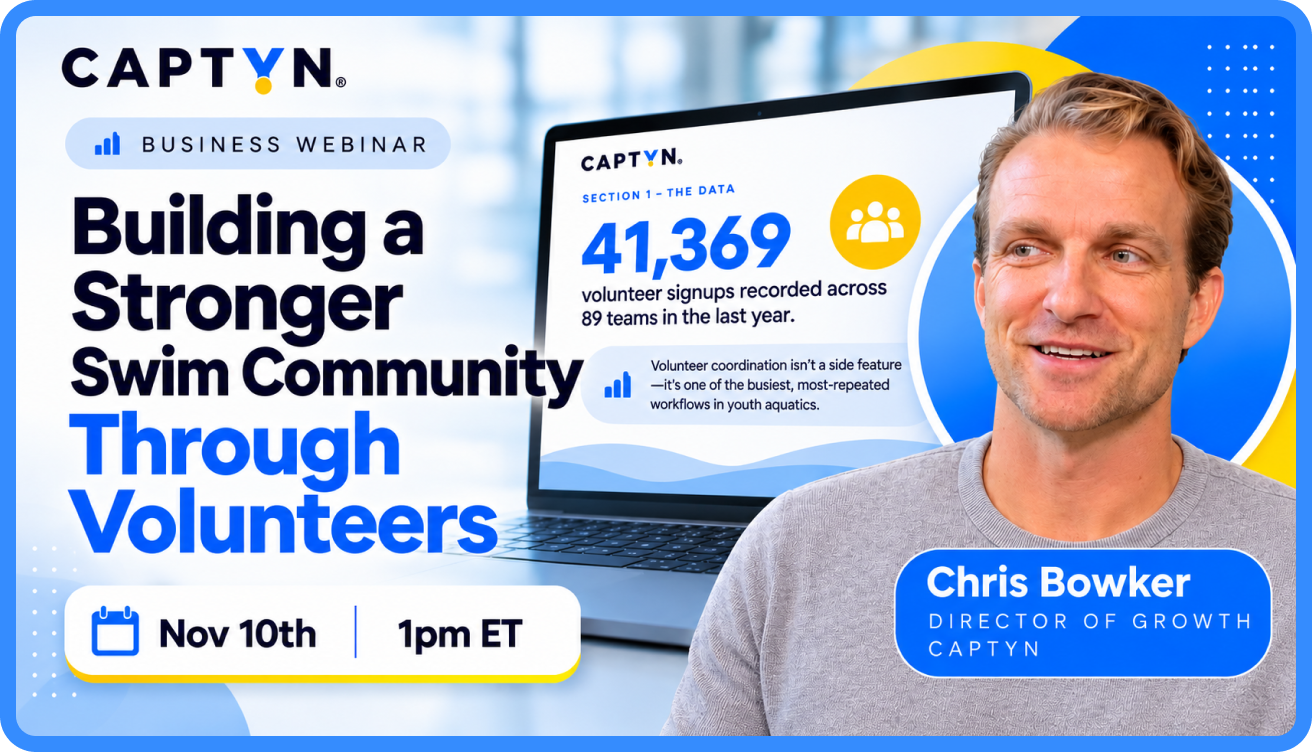
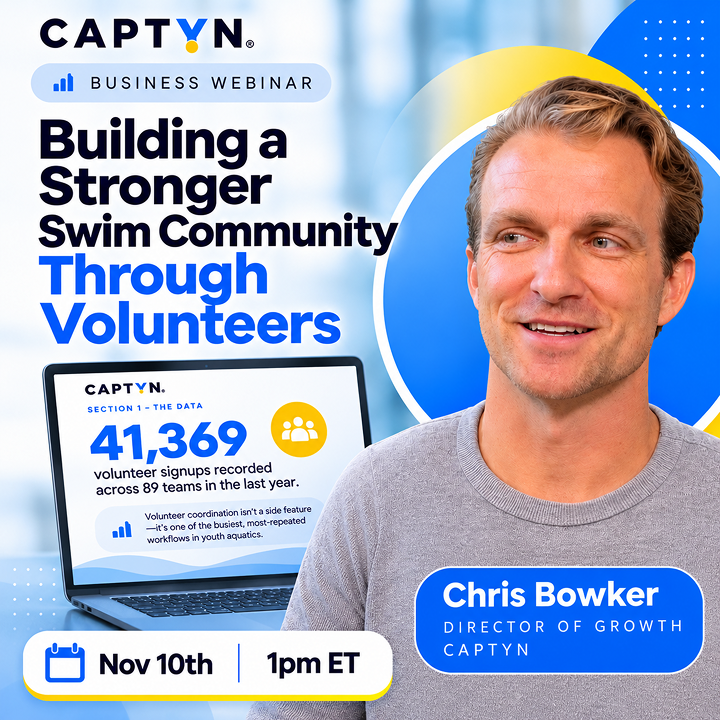
That experience matters. In Captyn’s webinar, Building a Stronger Swim Community Through Volunteers, Chris Bowker shared a lesson that stuck with him from a conversation with Nashville Aquatic Club: a volunteer’s time is valuable, and asking someone to arrive much earlier than necessary can create a negative experience.
It’s an easy detail to overlook when you’re trying to fill a long list of jobs. But a volunteer program is more than a staffing plan. It’s part of the experience your team creates for families.
Here are practical ways to make that experience better while getting the help your organization needs.
Think beyond the swim meet
Timers, officials, and hospitality volunteers are essential to a successful meet. But they aren’t the only ways families can contribute.
For the webinar, Captyn reviewed a snapshot of 1,181 volunteer events, 3,691 job definitions, and 41,369 signups across organizations using its volunteer tools. The review included meet staffing as well as activities such as fundraisers, social events, facility work, and registration support. These figures describe the Captyn data reviewed, not the swimming industry as a whole.
That wider view creates more opportunities for families to help:
- Set up or clean up a team social.
- Support a swim-a-thon or car wash.
- Help welcome families at tryouts or registration.
- Contribute supplies for hospitality.
- Serve on a board or committee.
- Assist with team gear distribution or facility work.
A parent who can’t spend a Saturday timing may be able to help with a fundraiser or bring supplies to a team event. Those contributions can support the organization and, where appropriate, count toward its volunteer requirements.
The goal isn’t to replace meet volunteers with donations. Meets still need people on deck. It’s to recognize that a healthy team has many kinds of work to share.
Make every job worth a volunteer’s time
Before posting a role, ask a simple question: What will this person do when they arrive?
If the answer is “wait until we need them,” rethink the report time or the job itself. A clear role helps volunteers understand why they’re there and lets them contribute without feeling like their time is being wasted.
Chris encouraged teams to be thoughtful about arrival times and to avoid asking timers to check in an hour before a session starts. The right lead time will depend on the meet and the role, but the principle is straightforward: ask people to arrive when they’re genuinely needed.
For each job, make sure families can find:
- What they’ll do
- Where and when to report
- How long the shift is expected to last
- Who to contact with questions
- What credit they’ll receive, if your team uses credits
This is especially important for new parents who may not know what a timer, runner, or clerk of course does. A short description can turn an unfamiliar job into a manageable first step.
The same attention to the parent experience applies throughout the season. In Create a World-Class New Parent Experience, we explore how clearer information can help families navigate the broader swim team journey. Volunteer signups are one more place to put that idea into practice.
Make the right jobs easier to find
A long list of inconsistent job names makes signups harder for families and creates more work for staff.
Chris recommended building a reusable catalog with straightforward names such as “Timer” or “Hospitality Helper,” then adding session, lane, and time details where needed. Familiar names help returning volunteers recognize their options from one meet to the next.
For example, start with the role:
- Timer — Saturday Prelims, Lane 1
- Timer — Saturday Prelims, Lane 2
- Hospitality Helper — Saturday Morning
There’s a balance between simplicity and detail. Chris noted that some lane-specific timing slots in the data appeared to fill quickly. Offering lane choices may appeal to parents who want to work alongside a friend, but creating more specific slots can add administrative work. Try it at one meet and see whether the benefit is worth the effort for your team.
Use volunteer credits thoughtfully
If your team has a volunteer requirement, credits can make expectations and contributions visible. They can also help you recognize that some jobs are harder to fill than others.
Start by setting a fair baseline that reflects the expected commitment. Then consider whether a hard-to-fill role should earn a premium. For example:
- A two-hour timing shift could receive two base credits.
- A difficult-to-fill timing shift could receive a 1.5× credit multiplier.
- An officiating role could receive additional credit in recognition of its commitment and training.
These are examples, not rules. A multiplier represents credit, not additional hours actually worked, so explain the distinction clearly in your policy.
Chris also encouraged teams to adjust credits when a session runs longer than expected. If a volunteer gives an extra half hour, recognizing that time shows that the team noticed.
Whatever approach you choose, communicate it before families sign up and keep balances accurate. Consider how changes affect people who signed up earlier, too. A credit system should feel fair and understandable, not like a surprise after the meet.
What about buyouts and no-shows?
Some teams offer a buyout for families who can’t or don’t want to volunteer. Others use negative credits for missed commitments. Both approaches were discussed in the webinar, but neither replaces a plan for filling the work.
If you offer a buyout, decide how the team will cover the open role. If you use a no-show policy, explain it upfront and allow for legitimate emergencies or reporting errors. The aim is accountability without making families feel punished for asking for help.
Design signups around family schedules
The signup experience begins before anyone chooses a job.
Chris recommended announcing when signups will open and choosing a reasonable time of day rather than making families compete for preferred roles at midnight. He also encouraged teams to make signups easy to complete on a phone.
A good signup announcement should tell families:
- When signups open and close.
- Where to find the available jobs.
- Which sessions their swimmer is attending.
- How credits or requirements work.
- Who can answer questions.
Set a deadline that gives your team time to identify gaps. If critical roles remain open, follow up with a specific request rather than a general plea for “more volunteers.”
For example:
We still need two timers for Saturday prelims, from 8:30 a.m. to approximately 12:30 p.m. If you can help, please sign up by Wednesday.
A specific request tells families what you need and helps them decide whether they can say yes.
Communicate before, during, and after the event
A signup is only the beginning. Families need to know that their commitment has been recorded, whether the schedule has changed, and where to go when they arrive.
A simple communication plan can cover the essentials:
- When signups open: Share the link, deadline, and key information.
- Before the event: Thank volunteers and remind them of their roles, report times, and locations.
- When plans change: Notify the affected volunteers as soon as possible.
- After the event: Thank volunteers again and let them know when credits have been posted.
Use the channels your families rely on, and keep time-sensitive messages brief. A text can be useful for a last-minute schedule change, while an email can carry fuller details.
In the webinar, Chris demonstrated how Captyn can help teams share signup links, check volunteers in, message groups of volunteers, and update credits. He also showed how parents can view upcoming responsibilities in their account. The technology supports the process, but the process still starts with deciding what families need to know and when.
For a broader look at treating every family touchpoint intentionally, read how Nashville Aquatic Club approaches the parent experience. The article focuses on program design and communication; the same mindset is useful when planning volunteer roles.
Make volunteers feel like part of the team
A volunteer program can be more than a list of obligations. Give it an identity families can recognize and enjoy.
That could mean a name for your meet crew, a volunteer shirt, a thank-you at the end of an event, or recognition at your season banquet. The gesture doesn’t need to be expensive. What matters is making it clear that volunteers are contributing to something meaningful.
Chris also suggested inviting parents to help run fundraisers and social events, rather than leaving coaches and staff to handle every detail. That gives families another way to participate while sharing work across the community.
Start with one event
You don’t need to rebuild your entire volunteer program before the next meet. Pick one upcoming event and review it from a parent’s point of view:
- Are the jobs clear and purposeful?
- Are report times reasonable?
- Can families easily see the available shifts and credits?
- Is there a plan for reminders, check-in, and a thank-you?
- Are there opportunities beyond the meet for families with different schedules?
Small changes can make the next volunteer experience more organized and more respectful of families’ time.
For more ideas, watch Building a Stronger Swim Community Through Volunteers in Captyn’s past webinar library.

More Ways to Explore Captyn

Demo
See Captyn in action by exploring top features and watching a free demo of the platform

Success Stories
See how organizations of all sizes are operating and growing their businesses on Captyn

Live Events
Meet up and chat with us at one of the many live events we sponsor and attend all across the country