%20-%20All%20Logos_Primary%20-%20Full%20Color.png)
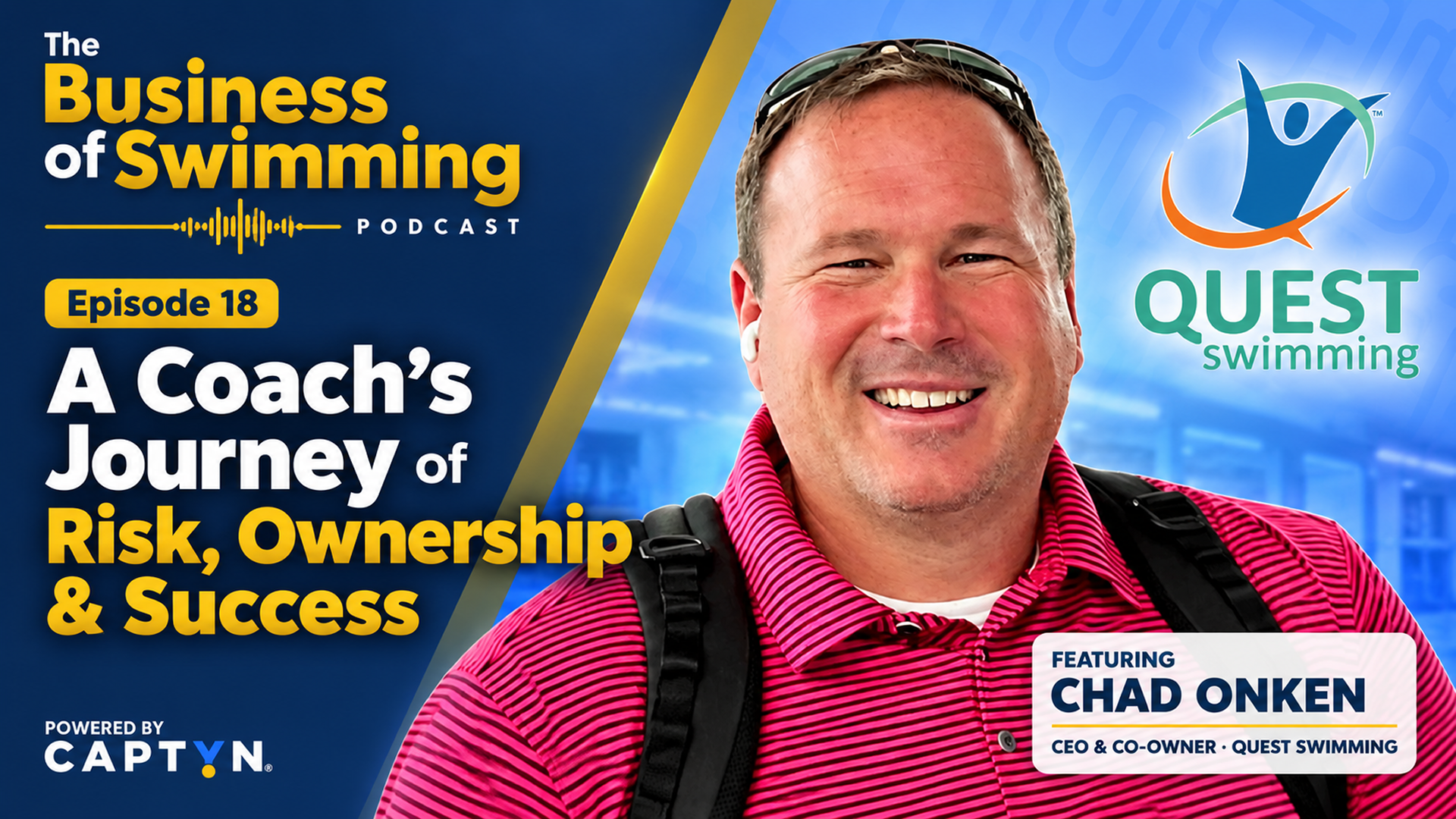
A Coach's Journey of Risk, Ownership, and Success



Introduction: From Coach to Owner
Chad Onken’s journey through swimming is not a straight line. It is a progression.
He started as a swimmer at Florida State, took the LSAT, and was fully prepared to go to law school. But coaching kept pulling him back. What began as a love for recruiting and building stronger teams turned into a career that has moved through nearly every layer of the sport: college coaching, elite athlete development, YMCA leadership, club ownership, swim school growth, retail, and international coach education.
Today, Chad is the CEO and Co-Owner of Quest Swimming in Midlothian, Virginia. He is also the Director of International Clinics for ASCA, where he helps educate coaches around the world. His path offers a clear lesson for the next generation of swim coaches: coaching can be more than a job. With the right mindset, it can become a business, a platform, and a path to long-term financial security.
The Early Pull Toward Coaching
Chad’s coaching story started before he officially became a coach.
As a student-athlete at Florida State, he loved recruiting weekends. He wanted to host recruits, sell the program, and help build something better. That interest in team building became one of the first signs that his future might not be in law.
After college, Chad was given an opportunity by Brooks Teal at North Carolina State. He admits there may not have been an obvious reason to hire him at the time, but that opportunity opened the door. At NC State, Chad discovered that coaching was not just about helping athletes move faster from one end of the pool to the other. It was about finding talent, building relays, improving systems, and figuring out how to make the entire program better.
“I loved coaching, I loved recruiting, and I loved what I call the Moneyball side of things. I was really into figuring out how to make the program better.”
Learning High Performance at NC State and Auburn
Chad’s early career gave him access to some of the highest levels of the sport.
At NC State, he worked with athletes like Cullen Jones, who would go on to become an NCAA champion, world record holder, and Olympic gold medalist. Later, David Marsh brought Chad to Auburn, where he worked around elite athletes such as Cesar Cielo, Matt Targett, Scott Goodrich, and Bryan Lundquist.
Those years gave Chad a taste of high-performance coaching. He saw what excellence looked like at the college and international level. But his next move would teach him something just as important: how swimming works as an organization.
The YMCA Years: Stability, Leadership, and Business Lessons
After Auburn, Chad returned to Raleigh, where his girlfriend, now his wife, was living. He expected his time in club swimming to be temporary. Instead, he spent 13 years at YMCA of the Triangle Area.
That chapter became one of the most important parts of his development.
At YOTA, Chad moved from being only a coach to becoming a director and leader. He had a budget. He had expectations. He had conversations with parents. He had to understand how decisions impacted athletes, families, staff, and the organization.
The YMCA also gave him stability. Retirement, benefits, and job security were all part of the package. For many coaches, that would have been enough. Chad could have stayed there for the rest of his career and built a comfortable life.
But the opportunity at Quest offered something different.
It offered ownership.
Why Chad Took the Risk at Quest
Leaving the YMCA was not about what the Y failed to provide. Chad is clear that he still respects and appreciates the YMCA. The move was about what Quest made possible.
Quest Swimming was founded by Dudley Duncan, Chad’s former coach. When Chad had the opportunity to return to his hometown and help grow the organization, it came with the possibility of ownership. Not just ownership of a program name or a group of families, but real ownership: land, pools, buildings, assets, and the full business.
“The opportunity at Quest was ownership. When we’re talking about ownership, we’re talking about the land, the pools, the buildings, everything.”
For Chad, the word “ownership” became central. Ownership meant responsibility. It meant risk. It meant the future would be shaped by the decisions he and his business partner, John Smithson, made every day.
“Over the course of my career, I’ve gone from getting a kid to go from one end of the pool to the other as fast as possible to taxes, insurance, ownership, and payroll.”
But that also meant building something that could last.
From W-2 Coach to Business Owner
One of the biggest themes in Chad’s story is the difference between being an employee and being an owner.
As a W-2 coach, the goal is often to coach well, run practices, help athletes improve, and meet the expectations of the organization. As an owner, the responsibilities expand quickly.
Suddenly, the job includes payroll, taxes, insurance, debt, staffing, facilities, customer experience, programming, and long-term planning. Chad describes that progression as natural, but also serious. When Quest built a new indoor swim lesson center, the business took on a seven-figure debt repayment timeline.
That was not a “maybe this will work” moment. It was a “the training wheels are off” moment.
For Chad, ownership created urgency. “I’m approaching 50, and knowing that the next 20 to 30 years of my life are going to be severely impacted by the decisions I’m making now as an owner, it’s scary sometimes, but it’s exciting.”
These are similar emotions and risks taken by Chris Davis at Swim Atlanta or Tim Hillen at Enfinity Aquatic Club who share their stories with us as well.
Building Multiple Revenue Streams at Quest
Quest is no longer just a swim team. Under Chad’s leadership, the business has grown into a multi-stream swimming organization.
The core revenue lines include:
- A competitive swim team with roughly 250 to 260 athletes
- A masters program
- A year-round swim school serving roughly 600 to 750 swimmers
- A retail swim shop serving Quest, summer league teams, high school teams, and other USA Swimming clubs
This matters because Chad’s business philosophy reflects a bigger lesson for the swimming industry. A swim team alone can be hard to scale. A swim school can create a stronger foundation. It can generate revenue, build community awareness, feed the team, and create more financial flexibility for the organization. This is very similar to our talk with Tony Batis at PASA.
“If I could go back to 30-year-old Chad, I’d say, start a swim school. It provides potential capital to do bigger things with your swim team, it’s a feeder system, and it’s a way to make an impact in the community.”
The Swim School Lesson
One of the most powerful moments in Chad’s story comes from advice he received years ago from Dave Salo.
Chad asked Salo what he should be doing as a young coach. He expected an answer about developing Olympians, finding elite athletes, or getting onto a national team staff. Instead, Salo asked if he had a swim school.
At the time, Chad dismissed the idea. He wanted to coach fast swimmers, not think about learn-to-swim programming.
Years later, he sees the wisdom clearly.
A swim school can create capital. It can strengthen the brand. It can serve the community. It can introduce families to the program before they ever join the team. It can also create the financial foundation coaches need if they want to pursue bigger dreams in the sport.
For Chad, the lesson is clear: young coaches need to start thinking like business people earlier.
Delegation, Leadership, and Letting Go
As Quest has grown, Chad has had to confront one of the hardest challenges for any coach-owner: delegation.
Coaches are trained to take ownership. They teach athletes to be accountable. They notice details. They care deeply about outcomes. Those same traits can make it hard to hand off responsibility.
Chad admits delegation is still a skill he is developing.
At Quest, John Smithson oversees much of the competitive swim team. Coach Anastasia leads the swim school curriculum and instruction. Amy Dean manages the swim shop. Chad’s goal is to keep building a team that allows the business to grow while his personal workload stays the same or becomes more focused.
That is an important shift. Growth cannot depend on one person doing everything. If the business is going to expand, leadership has to expand with it.
Chad’s Three Wishes for Swimming
When asked what he would wish for age group swimming, Chad did not focus on faster times, bigger meets, or better facilities. His answer centered on coaches.
His three wishes were:
- Make it easier for young coaches to enter the profession.
- Make it possible for coaches to stay in the profession without needing multiple jobs.
- Teach coaches how to think like business owners.
That answer reveals how Chad sees the future of swimming. The sport depends on people. If young coaches cannot get onto the pool deck, cannot afford to stay there, or cannot build a financially stable future, the entire sport suffers.
For Chad, protecting swimming means protecting the coaching profession.
Easier Entry for the Next Generation of Coaches
Chad believes the future of swimming is in good hands, but the sport has to make it easier for bright young coaches to get started.
There are good reasons for background checks, safety requirements, and education standards. But the process can also feel overwhelming for new coaches trying to enter the profession. Chad sees a need to reduce unnecessary friction while still protecting athletes and maintaining standards.
Through his work with ASCA, he is actively thinking about how coach education can help. Now that he is approaching 50, Chad sees himself in the role that older coaches once played for him. He wants to help mentor the next generation and create more pathways into the sport.
“We have to find a way to make it easier for people to get onto the pool deck and start their coaching career, then keep them there, and help them realize they can own their future.”
Better Pay and Long-Term Stability
Getting coaches onto the pool deck is only the first step. Keeping them there is the bigger challenge.
Chad points out a familiar problem in swimming: too many young coaches need multiple jobs just to survive. They may love the sport, but passion alone does not pay rent, build retirement, or create a stable future.
That is why business education matters. If clubs are run with stronger financial models, coaches can be paid better. If coaches understand ownership and revenue, they can build organizations that support both athletes and staff.
Better business models are not separate from athlete development. They make athlete development sustainable, coach development sustainable, and organizational stability better.
Teaching Coaches to Own Their Future
Chad’s final wish is for more coaches to develop a business mindset.
He points to successful coach-owned models and leaders who have built real businesses in swimming. The key is not simply being a great coach. It is learning how to build something that can support people, create assets, generate stability, and last beyond one season or one group of athletes.
For Chad, ownership is not just about money. It is about responsibility and long-term thinking.
A parent-run board may focus on the next few years. A coach-owner has to think about the health of the entire organization, the staff, the customer experience, the facilities, the programming, and the future value of the business.
That shift in perspective can change a coach’s life.
The Bigger Lesson from Chad’s Journey
Chad Onken’s story is not just about one coach becoming a business owner. It is about the future of the swimming profession.
His journey shows that coaches can evolve. They can start on deck, learn how programs operate, take calculated risks, build revenue streams, develop leaders, and create businesses that support both their families and their communities.
Quest Swimming was not the final destination. It became the vehicle.
For Chad, the business of swimming is not a distraction from coaching. It is what makes great coaching sustainable.
More Ways to Explore Captyn

Demo
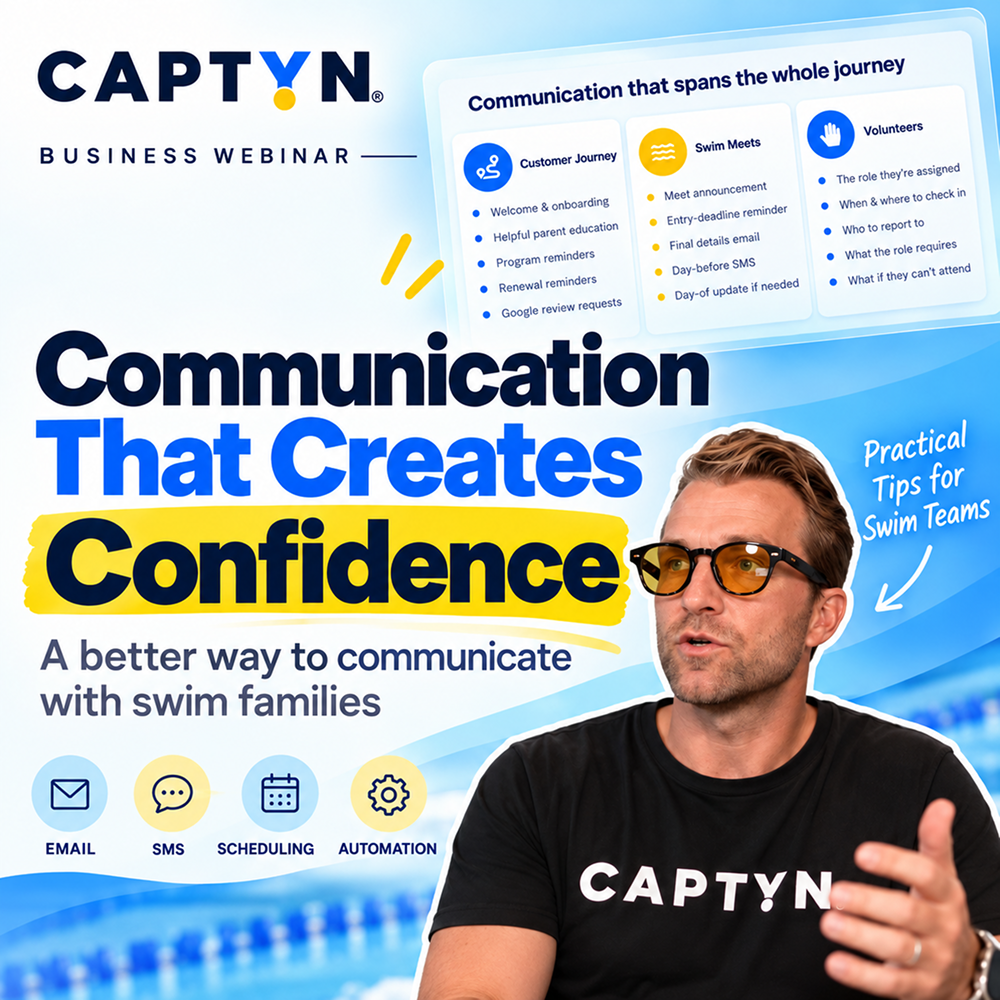
See Captyn in action by exploring top features and watching a free demo of the platform

Success Stories
See how organizations of all sizes are operating and growing their businesses on Captyn

Live Events
Meet up and chat with us at one of the many live events we sponsor and attend all across the country