%20-%20All%20Logos_Primary%20-%20Full%20Color.png)
Athletes First, Swimmers Second: James Marshall on Developing Better Young Swimmers

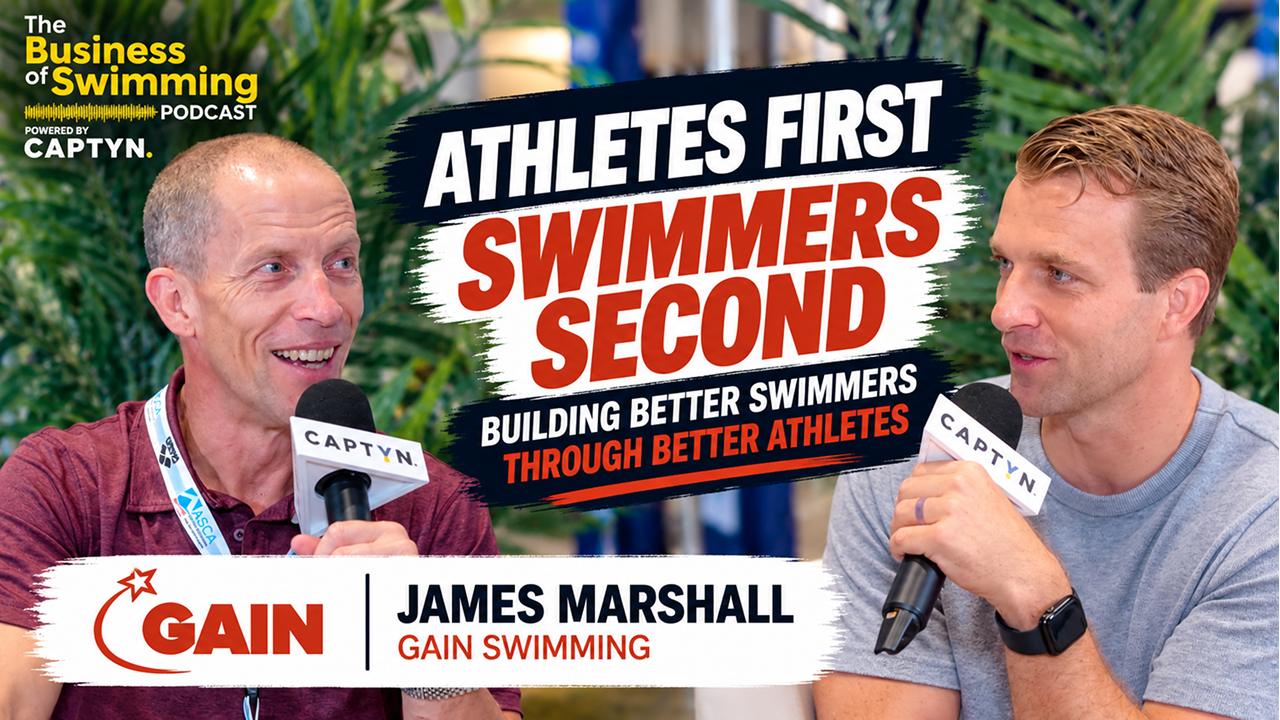
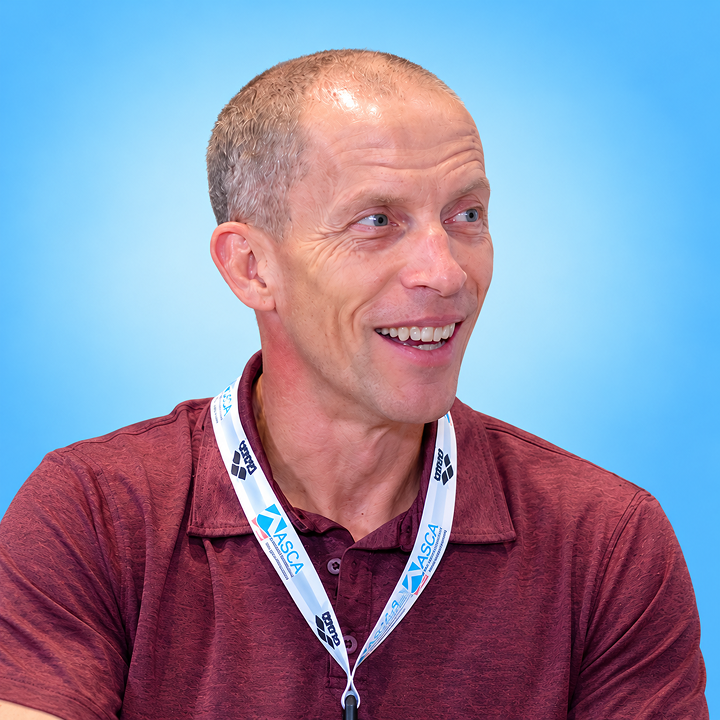

What if one of the best ways to develop a better swimmer is to spend more time developing the athlete outside of the pool?
Live from the 2026 ASCA World Clinic, the Business of Swimming sat down with James Marshall of GAIN Swimming to discuss athlete development, dryland training, coaching education, and why younger swimmers shouldn’t simply be treated like smaller versions of older athletes.
GAIN—the Gambetta Athletic Improvement Network—works with swimming programs ranging from high school and college teams to professional athletes. Its philosophy starts with a simple idea: create better athletes first, then build swimming-specific performance on top of that foundation.
For James, that approach is especially important when working with 12-and-under swimmers.
Create Athletes First, Then Swimmers
Swimming is an incredibly specialized sport.
Athletes spend hours repeating movements in an environment that removes many of the fundamental physical challenges found on land. For young swimmers who aren’t participating in other sports, that can mean missing opportunities to run, jump, roll, climb, land, balance, and explore different ways of moving.
GAIN’s approach is designed to fill those gaps.
The objective isn’t to make swimming less important. It’s to develop a more well-rounded athlete who is physically prepared to handle the demands of swim training.
That foundation can also help reduce the risk of injury.
As James explains, injury prevention shouldn’t necessarily be treated as something separate from training. If training is designed appropriately, it should help athletes become more resilient in the first place.
12-and-Under Swimmers Aren’t Mini Adults
One of GAIN Swimming’s current areas of focus is making coaching more creative and engaging for younger athletes.
Rather than becoming frustrated when today’s young swimmers don’t respond to the same methods used with previous generations, James believes coaches need to adapt.
That means meeting children where they are.
GAIN uses concepts such as exploration and guided discovery to create an environment where coaches work with young athletes rather than simply imposing a training program on them.
For 12-and-under swimmers, James believes the priority should be simple: make movement playful and make them want to come back.
“They are not mini adults.”
That’s an important distinction.
A 14- or 15-year-old athlete may be ready for a more structured training environment. An eight-, nine-, or ten-year-old swimmer has very different developmental needs.
Why Play Matters
James believes today’s environment makes intentional movement development even more important.
Many children aren’t spending their free time running around neighborhoods, climbing, jumping, cycling, and playing outdoors in the same way previous generations may have.
That can leave young athletes without some of the fundamental movement skills coaches might assume they already possess.
Before worrying about highly specific strength exercises, James wants young athletes to become comfortable with their bodies and enjoy moving.
Then coaches can begin layering more specialized training on top.
What Gymnastics Can Teach Swimming
James brings a gymnastics background to his work and uses what he calls “educational gymnastics” with younger athletes.
Instead of training toward gymnastics competition, the goal is learning how to move.
That can include tumbling, rolling, getting up and down from the floor, controlling the body in different positions, and solving movement problems.
The result is physical development that doesn’t necessarily feel like traditional conditioning.
Kids get tired. They get stronger. They improve their coordination.
But they’re having fun while doing it.
Those skills can eventually transfer back into swimming.
James shared the example of a young gymnast who entered swimming and was immediately comfortable diving from the starting blocks. His father viewed it as something unusual, but James saw the connection immediately: the athlete had already spent countless hours practicing related movement patterns through gymnastics.
The swimming skill was new. The underlying physical skill wasn’t.
Don’t Add Load to Bad Movement
As athletes mature, GAIN’s approach evolves.
That doesn’t mean immediately chasing heavier weights.
James describes the progression as “coordination training with resistance.” Before increasing load, athletes need to demonstrate that they can create and control the positions the exercise is intended to develop.
That requires coaches to continually ask one question:
Why are we doing this exercise?
James used an overhead squat as an example. If the purpose of the exercise is to help a swimmer develop a position related to turns, then adding more weight while the athlete loses the necessary depth and posture isn’t necessarily progress.
The exercise itself shouldn’t become the goal.
The desired athletic outcome should determine how the exercise is performed and progressed.
Teaching Coaches What to Look For
Better dryland training also requires better coaching.
Swim coaches spend enormous amounts of time developing their ability to analyze movement in the water. James believes they can benefit from developing that same eye on land.
Something as simple as knee position can provide valuable information.
If an athlete’s knees collapse inward when landing, squatting, or setting up on the starting block, their body may be fighting just to maintain the position a coach is asking for.
That makes technical execution more difficult.
A coach can provide excellent technical instruction, but if the athlete doesn’t have the physical capacity to reach or control the necessary positions, technique alone won’t solve the problem.
The job is to help make those positions easier for the athlete to achieve.
Helping Coaches Become Better Coaches
GAIN Swimming’s work extends beyond programming exercises.
The organization provides newsletters, clinics, an online coaching community, team education, programming support, and in-person workshops.
Its online community combines education with interaction, including monthly themes, seminars, articles, and contributions from both swimming specialists and outside experts.
For teams looking for deeper support, GAIN can work directly with coaching staffs to develop programs and provide hands-on education.
The objective is not simply to hand coaches a list of exercises.
It’s to help them understand why they’re doing them, how to coach them safely, and how those movements fit into the broader development of an athlete.
GAIN is also exploring ways to help coaches with the operational side of their jobs, including using AI appropriately to reduce administrative workloads.
The goal is to give coaches more time to do what they entered the profession to do: coach.
How High Is an Athlete’s Ceiling?
The conversation ended with a hypothetical.
Two 14-year-old athletes walk through the door.
One has extensive swimming experience. The other has only basic swimming knowledge but a strong gymnastics background.
Which athlete would James choose?
His answer: the gymnast.
Why?
Potential.
A swimmer who has already trained extensively from ages 10 through 14 may be far ahead today—but James asks coaches to consider where that athlete’s ceiling will be four years from now.
The gymnast may initially be behind in swimming-specific skills, but brings years of movement development, strength, coordination, and body awareness that can provide an enormous foundation to build upon.
There is one important qualification: motivation.
Ultimately, James wants to know which athlete actually wants to be there. Which athlete is hungry to improve, and which is simply participating because they’re expected to?
Physical development creates potential.
The athlete still has to want to use it.
Building Better Swimmers by Building Better Athletes
Swimming-specific training will always matter.
But James Marshall and GAIN Swimming challenge coaches to think beyond what happens between the lane lines.
For younger swimmers especially, running, jumping, rolling, landing, balancing, playing, and learning how to control their bodies aren’t distractions from swimming development.
They’re part of it.
Develop the athlete first.
Then give that athlete the swimming skills needed to perform.
That broader foundation may ultimately create a swimmer who is not only better prepared to perform today, but has more room to continue developing tomorrow.
More Ways to Explore Captyn

Demo
See Captyn in action by exploring top features and watching a free demo of the platform

Success Stories
See how organizations of all sizes are operating and growing their businesses on Captyn

Live Events
Meet up and chat with us at one of the many live events we sponsor and attend all across the country