%20-%20All%20Logos_Primary%20-%20Full%20Color.png)
What It Takes to Execute the Swim Atlanta Model

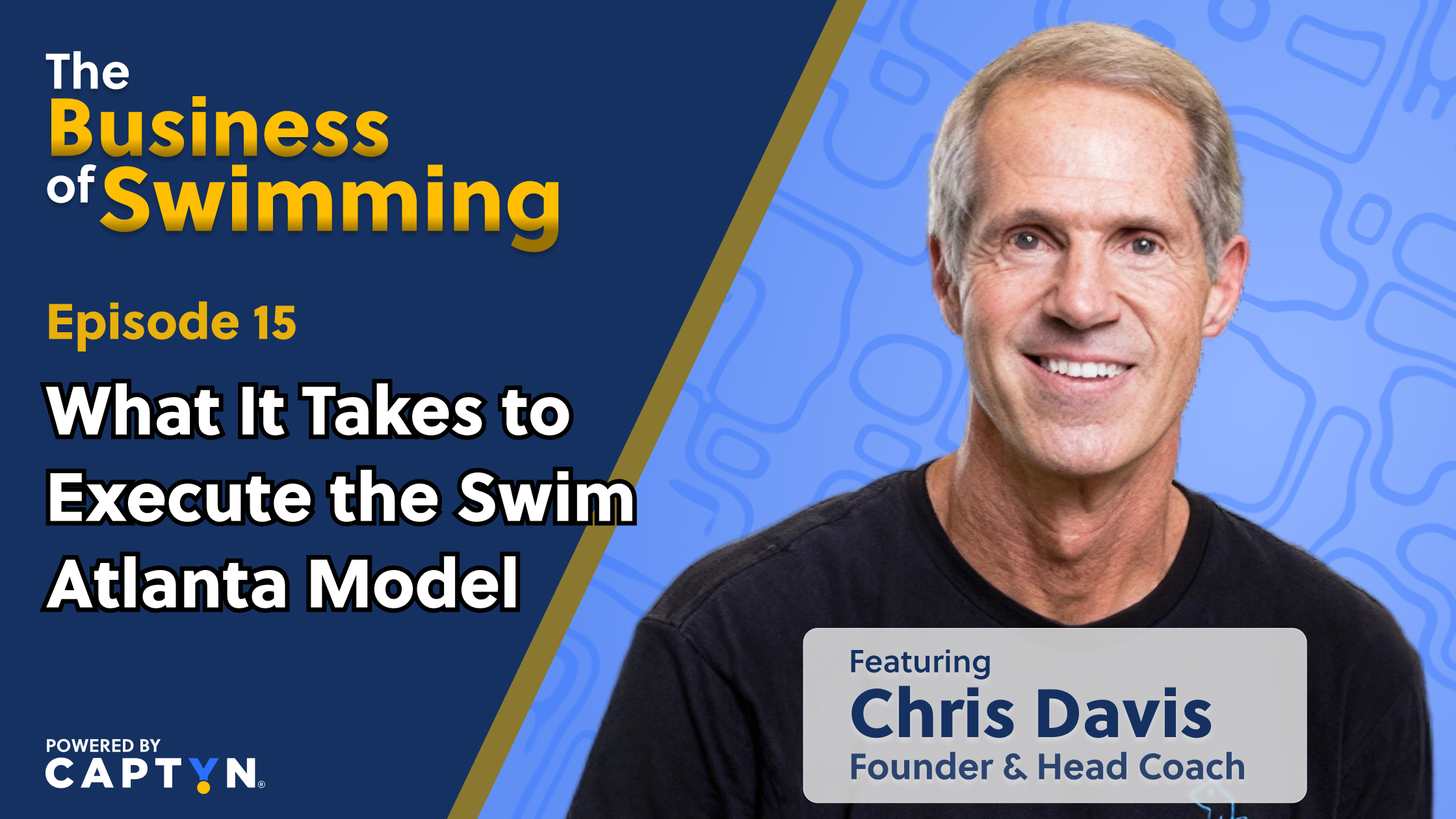


Chris Davis Sr. turned SwimAtlanta from a 28-swimmer startup in 1977 into one of the most successful swim businesses in the country. What began as a coach-owned alternative to the traditional parent-run club model grew into a multi-location operation with a nationally recognized competitive team, a strong swim school, and a long track record of producing elite athletes.
The business success of SwimAtlanta is what makes Davis’ story so important. He proved that a swim program could be more than a team, and the business model about more than just keeping the lights on. By combining swim lessons, recreational swimming, competitive programming, smart facility placement, disciplined expense management, and coach accountability, Davis built a model that makes money - a lot of money.
SwimAtlanta’s impact reaches beyond Atlanta. Coaches and former SwimAtlanta leaders have used the model to build successful programs of their own, including Mecklenburg Swim Association (MSA) , Nitro Swimming, and Metroplex Aquatics. Chris has helped show that swimming can be a sustainable business, not just a passion project.
Being an Entrepreneur Within the Sport of Swimming
Starting SwimAtlanta in 1977
When Chris Davis Sr. started SwimAtlanta in 1977, he was not trying to build one of the largest swim businesses in the country. In fact, he said he was not even thinking like a business owner yet.
“I didn’t know what the word entrepreneur meant. I just knew that I was starting a swimming program.”
The decision came from a simple belief: if he was going to stay in coaching, he wanted to build something that was coach-owned and coach-run. He had worked inside parent-run organizations and knew that was not the path he wanted long term.
“If I were ever gonna stay in coaching, I was gonna do it myself and either sink or swim, no pun intended, by my efforts.”
The First Team and the First Facility
The first version of SwimAtlanta was far from glamorous. Davis started with 28 swimmers, no indoor facility, and a heated outdoor summer league pool. His top group trained before and after school, and because the business was losing money, Davis worked another job during the day.
“Every morning we’d wake up about 3:3am, get in our cars, go pick everybody up, take them to practice, run a two hour practice, drive back to school, drop off, go to our house, take a shower, eat some breakfast, and go to our regular jobs.”
After his first attempt at a facility failed, a parent on his team suggested he use an SBA load. It was not the dream facility he originally imagined. The plan was scaled back again and again until it became something the business could afford: a practical six-lane pool, small bathrooms, an office, and a teaching pool. It was not fancy, but it gave SwimAtlanta a permanent home.
The Work Required
That work ethic became one of the defining traits of SwimAtlanta. Davis was not just the coach. He was the swim school manager, pool maintenance person, custodian, recruiter, facility operator, and bill payer.
As he put it, building the business required being willing to do whatever it took and then being willing to do more to make up for the mistakes along the way.
“You have to be willing to outwork your mistakes because you’re gonna make them.”
Chris shared a helpful hint that he would hand his car keys next to the pump house when backwashing, filling, or adding chlorine. You only forget to turn something off once when it comes to a pool. The water bill will crush you.
Learning the Business Model
From the beginning, Davis learned one of the most important business lessons in swimming: a team alone was not enough.
“We learned very early that you can’t just make it off a team.”
The swim school became essential to the model. Lessons filled daytime water, created a feeder system for the team, and gave the facility a more stable financial foundation. His typical lesson program would have more than 3x the number of participants than his swim team. The swim lessons, rec-team help pay for the swim team and facility.
How SwimAtlanta Chose Locations
As Atlanta expanded, Chris expanded with it. He looked at summer league density, family demographics, traffic patterns, and convenience. Before opening new locations, he studied where families already were and where swimming demand could grow.
His rule was practical: find the summer league swimmers, understand the families, and place the facility where parents could realistically get there.
“I got a map and flagged every summer league program within a five mile radius and then tried to find some land or a shopping center or something that I could put a pool in within five miles of that.”
Why SwimAtlanta Kept Expanding
Chris kept expanding not because it was easy, but because he understood the opportunity. If Atlanta was growing and families needed swimming, he wanted SwimAtlanta positioned to serve them before someone else did. Chris was not the first or only swim team back in 1977. There were more established and much larger teams. Being the owner and decision maker he could move faster than board run teams and take advantage of the opportunity.
That strategy and quick decision making helped SwimAtlanta grow into a multi-location swim business with facilities across the Atlanta metro area and one of the largest swim clubs in the nation.
What SwimAtlanta Represents Today
Today, SwimAtlanta stands as proof that swimming can be more than a coaching job. It can be a real business, but only if the operator is willing to treat it like one.
Chris’ story is not about luck or timing alone. It is about discipline, risk, location strategy, programming, financial control, and decades of relentless work.
The SwimAtlanta Model
Facilities Built for Business
The SwimAtlanta model starts with a practical facility, not a luxury facility. Davis made it clear that success did not require building the “Taj Mahal” of swimming. In fact, some of SwimAtlanta’s most successful athletes came out of facilities that were simple, crowded, and built for function.
“I don’t think you have to have the Taj Mahal to be successful. Water is water.”
Most SwimAtlanta facilities were built around the same basic idea: a training pool for the team and a teaching pool for lessons. The competitive team created long-term loyalty and identity. The lesson program created daily activity, high profit margins, and a feeder system for future swimmers. That combination became critical.
Davis learned that a facility had to keep water active beyond traditional team practice hours. Swim lessons helped fill the pool during the day and gave SwimAtlanta a broader business base than a team-only model could provide.
Why the Model Works
The SwimAtlanta model works because it is not built around one coach, one pool, or one great generation of swimmers. It is built around a repeatable business system: convenient locations, strong learn-to-swim programming, competitive team development, coach accountability, and a clear understanding that families are customers with limited time.
That same formula shows up in programs that followed or reflect pieces of the SwimAtlanta blueprint, including Mecklenburg Swim Association, Nitro Swimming, and Metroplex Aquatics.
1. Serve Families Through Multiple Locations
One of the clearest similarities is location strategy. These programs do not ask every family to drive across a large metro area to one central pool. They bring swimming closer to where families live.
SwimAtlanta lists locations across the Atlanta area, including Sugarloaf, Johns Creek, Hamilton Mill, East Cobb, Roswell, Georgia Tech, Midway/Cumming, and Piedmont Park.
Mecklenburg Swim Association uses the same neighborhood-based approach in greater Charlotte, with locations including Tom Short Road, Sardis Road, Moss Creek, and Indian Trail. Nitro Swimming has built a similar Austin-area footprint with locations in Bee Cave, Cedar Park, Kyle, and Steiner Ranch.
This matches one of Davis’ biggest observations about today’s parents: convenience matters more than ever.
“Today it’s their child, their time and then their money.”
That is why the multi-location model matters. Families may value quality, but they also need swimming to fit into their daily lives. These programs understand that a great swim business has to be accessible. This is especially true for younger swimmers who fill your most profitable programs (lessons, seasonal, and beginner agegroup). Parents of highly competitive athletes will drive farther. But highly competitive athletes do not pay the bills and are at best break even.
2. Offer the entire swimming lifecycle
Another major similarity is the combination of competitive swim team, seasonal swimming and swim school. These programs are not just elite teams. They are full swim-businesses.
SwimAtlanta has a program for everyone, season high school swimmer, learn to swim, just wanna have fun swim, and be the best swim. MSA promotes swim team, swim lessons, and Masters programming. Nitro separates its brand clearly into Nitro Swim School and Nitro Swim Team, while emphasizing that its indoor swim centers include both competitive pools and separate learn-to-swim pools.
That mirrors Chris’ core lesson from the early days of SwimAtlanta:
“We learned very early that you can’t just make it off a team.”
These programs also create a pathway for different ages, abilities, and levels of commitment. They are not only focused on the top 1% of swimmers.
MSA describes its mission as “building swimmers for life” and offers swim school, competitive team, and adult Masters programming. Nitro promotes lessons for newcomers, competitive swimming from entry level to national group, and programming for all levels. SwimAtlanta similarly combines learn-to-swim, age group, senior, and elite competitive pathways across its locations.
That matters because a sustainable swim business cannot rely only on elite athletes. It needs a broad base of participants: beginners, developmental swimmers, age group swimmers, senior swimmers, adults, and families who may enter the sport for different reasons.
The best swim businesses understand that the future Olympian and the four-year-old in lessons are part of the same ecosystem. The best business understands that every family who walks through their doors could spend more than $20,000 with them if they can keep them. Chris shares a story of Olympian Eric Shantue starting in their lesson program and staying through his senior year of high school. Not only is that a great story of progression through a swim system but also highlights that a single swimmer can start at age 4 in lessons and 14 years later graduate from the program and average $2,000 a year in investment.
4. Treat Coaching as Business Owners and Coaches
Chris’ model works because it forces coaches to think beyond workouts. Coaches are responsible for the experience, retention, communication, and growth of their groups.
His pay-per-participant structure made that clear:
“...not only do they like Johnny and they want to help Johnny, but Johnny also is part of their paycheck.”
That mindset shows up in the way these programs present themselves. Having coaches fully aligned with the business model is critical to success. Chris makes it simple: swimmers get faster, they have fun doing it, they build connections, they stay. A coach can control every aspect of retention and Chris wants to compensate them for a job well done.
Coaches can also control how many kids sign-up
“They'll go to Summer League swim meets and recruit. They'll do clinics at Summer League pools because they want to get their numbers up because if the numbers go up, they make more and more money.”
Chris effectively put coaches in control of their paychecks and raises.
5. The Common Formula
What makes SwimAtlanta, Mecklenburg Swim Association, Nitro Swimming, and Metroplex Aquatics similar is not that they are identical. Each operates in a different city, with different facilities and different local dynamics.
But the common formula is clear:
- Multiple locations that make swimming convenient for families
- Swim school plus swim team as the business foundation
- Programming for a wide range of ages and ability levels
- Coaches who are responsible for relationships, retention, and growth
- A broad participation base that supports elite development
- Entrepreneurial leadership that treats swimming as both a sport and a business
That is why the SwimAtlanta model matters. It proves that the strongest swim businesses are not built only on fast swimmers. They are built on systems that create access, serve families, develop coaches, and keep water full. Not every metro needs seven locations. But the ideas and concept can be replicated as a single location or multiple locations of maybe just lessons and seasonal swimming and a single location for a competitive team. If you build your model with the swim atlanta foundational pieces that then fits your markets, you can build a business you can sell, retire from, or grow your wealth.
6.Chris’s Advice and Wishes for the Sport of Swimming
When asked what advice Chris has for young coaches who want to be more than just a swim coach, here are his three pieces of advice.
- “Well obviously if they're gonna make that a career, they better be a pretty good coach. And I think being great with kids and families is paramount”
- “You have to be willing to put in the extra time to proactively build your program”
- “You have to think of coaching as a profession. How you look, how you communicate will determine how well you are respected for what you do off the deck”
Chris Davis’ wish for Age Group Swimming. USA Swimming would invest more energy, money and time into the sport. If everyone at USA Swimming was paid like a SwimAtlanta coach, based on growth and retention, then Chris believes how USA Swimming leadership spends their resources would drastically change. Swimming is a numbers game, the more athletes we have in the sport at every step the faster the swimmers will be. He is 100% validated in this belief by a study done in 2015/16 examining 59 LSC performances.
Cornett & Stager tested this using 59 U.S. swimming regions, ages 6–19, across six years of data. Participation alone explained 41–62% of the differences in top swim times. And when a region doubled its number of swimmers, its fastest time improved by ~2%, and up to 5% for the youngest ages.
Basically if you want a faster team get more kids swimming.


More Ways to Explore Captyn

Demo
See Captyn in action by exploring top features and watching a free demo of the platform

Success Stories
See how organizations of all sizes are operating and growing their businesses on Captyn

Live Events
Meet up and chat with us at one of the many live events we sponsor and attend all across the country